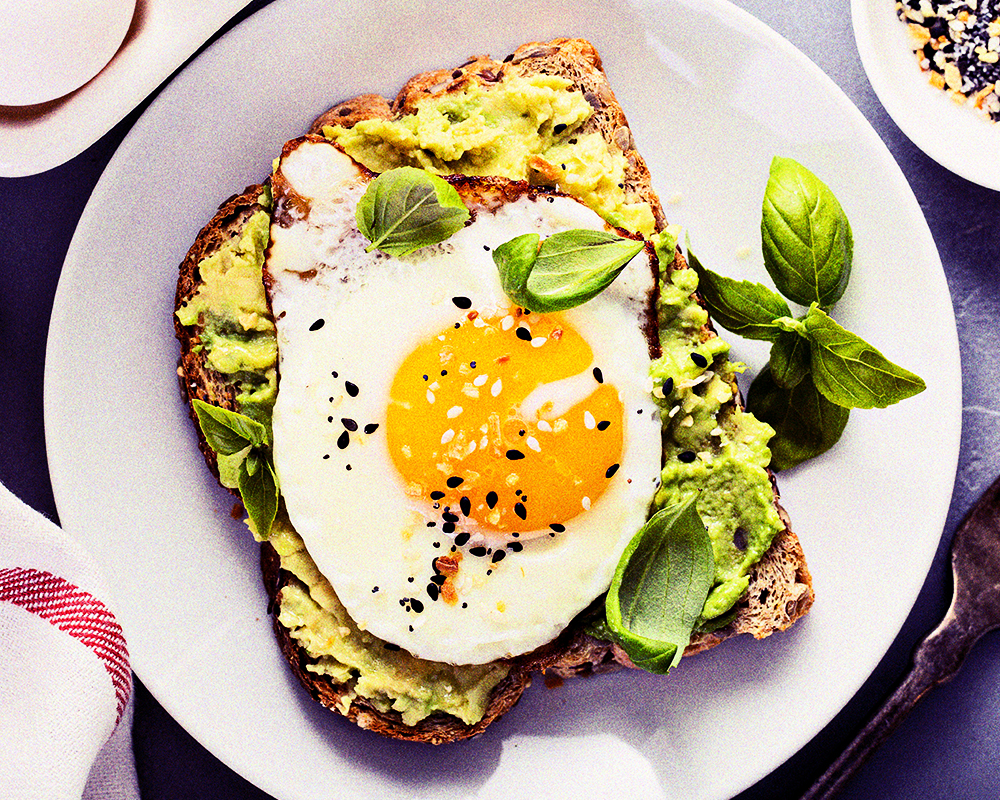
Chicken eggs are widely used in many types of dishes, both sweet and savory, including many baked goods. Some of the most common preparation methods include scrambled, fried, poached, hard-boiled, soft-boiled, omelettes, and pickled. They also may be eaten raw, although this is not recommended for people who may be especially susceptible to salmonellosis, such as the elderly, the infirm, or pregnant women. In addition, the protein in raw eggs is only 51 percent bioavailable, whereas that of a cooked egg is nearer 91 percent bioavailable, meaning the protein of cooked eggs is nearly twice as absorbable as the protein from raw eggs.[32]
As a cooking ingredient, egg yolks are an important emulsifier in the kitchen, and are also used as a thickener, as in custards.
The albumen (egg white) contains protein, but little or no fat, and may be used in cooking separately from the yolk. The proteins in egg white allow it to form foams and aerated dishes. Egg whites may be aerated or whipped to a light, fluffy consistency, and often are used in desserts such as meringues and mousse.
Ground eggshells sometimes are used as a food additive to deliver calcium.[33] Every part of an egg is edible,[citation needed] although the eggshell is generally discarded. Some recipes call for immature or unlaid eggs, which are harvested after the hen is slaughtered or cooked, while still inside the chicken.[34]
cooking
Eggs contain multiple proteins that gel at different temperatures within the yolk and the white, and the temperature determines the gelling time. Egg yolk becomes a gel, or solidifies, between 61 and 70 °C (142 and 158 °F). Egg white gels at different temperatures: 60 to 73 °C (140 to 163 °F). The white contains exterior albumen which sets at the highest temperature. In practice, in many cooking processes the white gels first because it is exposed to higher temperatures for longer.[35]
Salmonella is killed instantly at 71 °C (160 °F), but also is killed from 54.5 °C (130.1 °F), if held at that temperature for sufficiently long time periods. To avoid the issue of salmonella, eggs may be pasteurized in-shell at 57 °C (135 °F) for an hour and 15 minutes. Although the white then is slightly milkier, the eggs may be used in normal ways. Whipping for meringue takes significantly longer, but the final volume is virtually the same.[36]
If a boiled egg is overcooked, a greenish ring sometimes appears around egg yolk due to changes to the iron and sulfur compounds in the egg.[37] It also may occur with an abundance of iron in the cooking water.[citation needed] Overcooking harms the quality of the protein.[38] Chilling an overcooked egg for a few minutes in cold water until it is completely cooled may prevent the greenish ring from forming on the surface of the yolk.[39]
Peeling a cooked egg is easiest when the egg was put into boiling water as opposed to slowly heating the egg from a start in cold water.[40]
storage
Careful storage of edible eggs is extremely important, as an improperly handled egg may contain elevated levels of Salmonella bacteria that may cause severe food poisoning. In the US, eggs are washed. This cleans the shell, but erodes its cuticle.[41][42] The USDA thus recommends refrigerating eggs to prevent the growth of Salmonella.[27]
Refrigeration also preserves the taste and texture, however, intact eggs (unwashed and unbroken) may be left unrefrigerated for several months without spoiling.[43] In Europe, eggs are not usually washed, and the shells are dirtier, however the cuticle is undamaged, and they do not require refrigeration.[42] In the UK in particular, hens are immunized against salmonella and generally, their eggs are safe for 21 days.